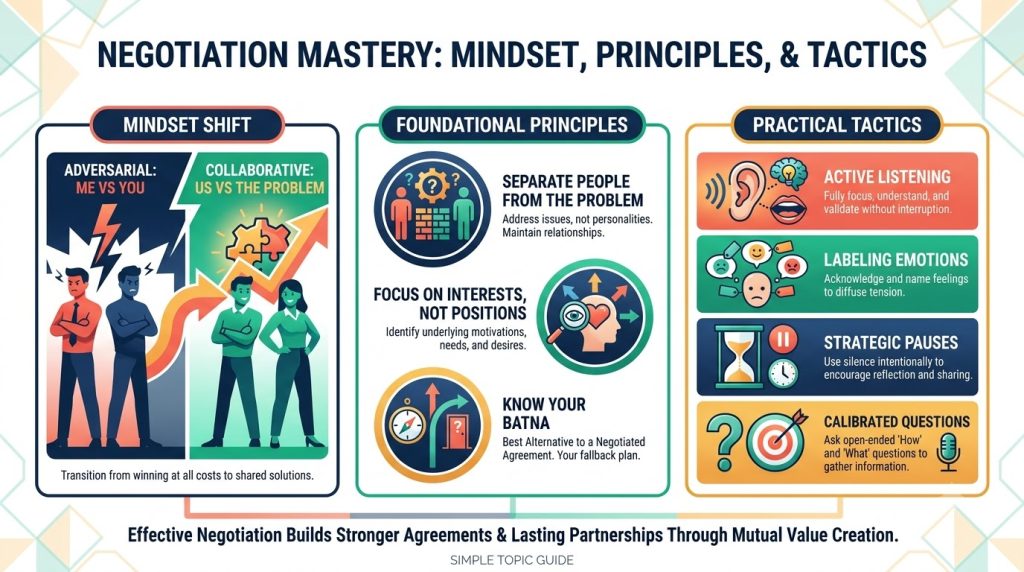
When most people picture “negotiation,” they imagine high-powered corporate boardrooms, slick lawyers in tailored suits, or hostage negotiators resolving a high-stakes crisis. Because of this Hollywood perception, many people view negotiation as an aggressive, confrontational skill reserved only for high-stakes business deals.
The reality is that you negotiate every single day—whether you realize it or not.
You negotiate when you discuss a workload adjustment with your manager, agree on rent terms with a landlord, split household responsibilities with a partner, or settle on a weekend movie choice with friends. Negotiation isn’t about “winning” an argument or intimidating someone into submission; it is simply the process by which two or more parties discover a mutually acceptable path forward. Mastering daily negotiation allows you to advocate for your worth, protect your boundaries, and resolve conflicts gracefully without damaging your relationships.
The Mindset Shift: From Confrontation to Collaboration
The biggest mistake people make in everyday negotiation is viewing it as a zero-sum game—a tug-of-war where one person must lose for the other to win. This adversarial mindset creates tension, triggers defensiveness, and often leads to deadlocks.
To become an effective negotiator, you must shift from an adversarial mindset to a collaborative mindset:
+-----------------------------------------------------------------------+
| ADVERSARIAL MINDSET (Zero-Sum)                                        |
| "Me vs. You" — Goal: Win the argument and force compliance.            |
+-----------------------------------------------------------------------+
                                   │
                                   ▼
+-----------------------------------------------------------------------+
| COLLABORATIVE MINDSET (Win-Win)                                       |
| "Us vs. The Problem" — Goal: Solve a shared obstacle together.        |
+-----------------------------------------------------------------------+
When you reframe the discussion as “Us vs. The Problem” rather than “Me vs. You,” the atmospheric pressure drops. The conversation transforms from a fight over competing demands into a joint brainstorming session designed to find a solution that satisfies both sides.
3 Foundational Principles of Graceful Negotiation
Whether you are asking for a raise or agreeing on a freelance deadline, three core principles form the foundation of principled negotiation:
1. Separate the People from the Problem
It is easy to let emotions cloud a negotiation when you feel frustrated. Principled negotiators remain soft on the person, but hard on the problem. You can be warm, empathetic, and respectful toward the individual while remaining firm and grounded regarding the outcome you need.
2. Focus on Interests, Not Positions
- A Position is what someone says they want (“I need a 20% salary increase” or “I am keeping the security deposit”).
- An Interest is the underlying reason why they want it (“I feel underappreciated and my living costs increased” or “I am worried about repair costs”).
When you stop arguing over rigid positions and start asking questions to uncover underlying interests, you uncover creative solutions that satisfy both parties’ true motivations.
3. Know Your BATNA (Best Alternative to a Negotiated Agreement)
Your BATNA is your safety net—it is the best course of action you can take if the negotiation fails completely and no agreement is reached.
- If you are negotiating a raise and already have a job offer from another company, your BATNA is high, giving you quiet confidence.
- If you have no backup plan, your BATNA is weak, making you vulnerable to accepting a poor deal. Knowing your BATNA beforehand prevents you from accepting a terrible deal out of desperation or walking away from a good deal out of anger.
How to Handle High-Stress or Intimidating Negotiators
Not every conversation takes place in a calm, friendly atmosphere. Sometimes you find yourself negotiating with someone who uses pressure tactics, raises their voice, or tries to bully you into accepting a bad deal. When faced with aggression, most people either freeze up and yield, or explode and make the situation worse.
To maintain your composure and keep control of the conversation, use these three battle-tested ground rules:
- Take Control of the Tempo: Bullying tactics rely on speed and high pressure to force quick concessions. You are never obligated to respond instantly. Use simple time-buying phrases like: “That’s an important point. Let me take a moment to consider that before replying,” or “I want to make sure I give this proper thought—let’s take a 10-minute break.”
- Anchor to Objective Standards: Shift the debate away from personal opinions and onto neutral, objective benchmarks. Refer to industry standards, market rates, official company policies, or third-party data. It is much harder for an aggressive counterpart to argue with clear, unassailable facts.
- Name the Behavior Calmly: If someone becomes excessively aggressive or disrespectful, call out the dynamic gently without attacking them back. Say something like: “It feels like we’re getting a bit heated here. I genuinely want to find a solution that works for both of us, but I need us to discuss this calmly.”
Practical Tactics for Everyday Conversations
You don’t need complex psychological tricks to negotiate effectively. These four simple, practical habits will instantly elevate your conversational influence:
1.1. Mirror Key Words:Active Listening.
Repeat the last two or three critical words your counterpart said as an open-ended question. If a landlord says, “We can’t extend the lease because maintenance costs are too unpredictable,” respond softly with: “Unpredictable costs?” This encourages them to elaborate on their true concerns without feeling interrogated.
2.2. Label Their Emotions:Empathy in Action.
Acknowledge the other party’s feelings directly to disarm tension. Phrases like “It sounds like you’re under a lot of pressure from senior management right now” or “It seems like you’re concerned about project timelines” make the other person feel heard and reduce defensive behavior.
3.3. Embrace Tactical Silence:Strategic Pauses.
When you make a request or name a price, state your point clearly—and then stop talking. Resist the urge to fill uncomfortable silence with nervous excuses or immediate compromises. Giving the other person room to digest your proposal often leads to them offering a better solution.
4.4. Ask Calibrated Questions:Guide, Don’t Force.
Instead of making rigid demands, ask open-ended questions that start with “How” or “What.” Questions like “How can we make this deadline work without sacrificing work quality?” invite the other person to help solve your problem.
Common Negotiation Pitfalls to Avoid
Even well-intentioned negotiators can accidentally undermine their own leverage by falling into these common traps:
- Bidding Against Yourself: Making an initial offer, sensing a moment of uncomfortable silence, and immediately lowering your request before the other person has even responded.
- Taking Rejection Personally: Treating a “no” as a personal attack rather than an invitation to gather more information. Often, “no” simply means “I am not comfortable with this specific proposal yet.”
- Ignoring the Other Side’s Win: Focusing so intensely on your own goals that you forget to make the agreement feel like a victory for the other person. A deal only sticks if both sides feel respected.
The Power of the “Flinch”
When the other party presents their initial offer or price, react with a subtle, polite “flinch”—a moment of visible, quiet hesitation rather than an immediate yes. Jumping at the first offer instantly creates regret on both sides: you wonder if you could have gotten a better deal, and they wonder if they offered too much. A gentle pause shows that you take the proposal seriously while signaling that there may be room for further conversation.
Confirming the Agreement in Writing
A negotiation isn’t complete when the talking stops. Verbal agreements are notoriously vulnerable to misinterpretation, forgetfulness, or shifting goalposts later on.
Always follow up a successful negotiation with a brief, professional summary email outlining:
- What was agreed upon (e.g., revised scope, updated deadline, or agreed price).
- Next steps and responsibilities for both parties.
- A gentle confirmation request (e.g., “Please let me know if I missed anything key here!”).
This simple habit protects your boundaries, ensures total clarity, and prevents future misunderstandings from souring a great agreement.
Conclusion: Advocacy Without Aggression
Negotiation is ultimately an act of self-respect. It is the art of standing up for your needs, values, and worth without needing to resort to anger, intimidation, or passivity.
When you replace aggression with empathy, focus on shared interests, and approach discussions with a collaborative spirit, negotiation ceases to be intimidating. It becomes a powerful life skill that opens doors, protects your boundaries, and builds lasting, mutually beneficial relationships across every area of your life.

Shafeeq Gargal is an educator and learning enthusiast dedicated to demystifying complex concepts. With a background in technical problem solving and education, he creates clear, structured guides on personal finance, productivity, and modern technology to help readers build practical everyday skills.